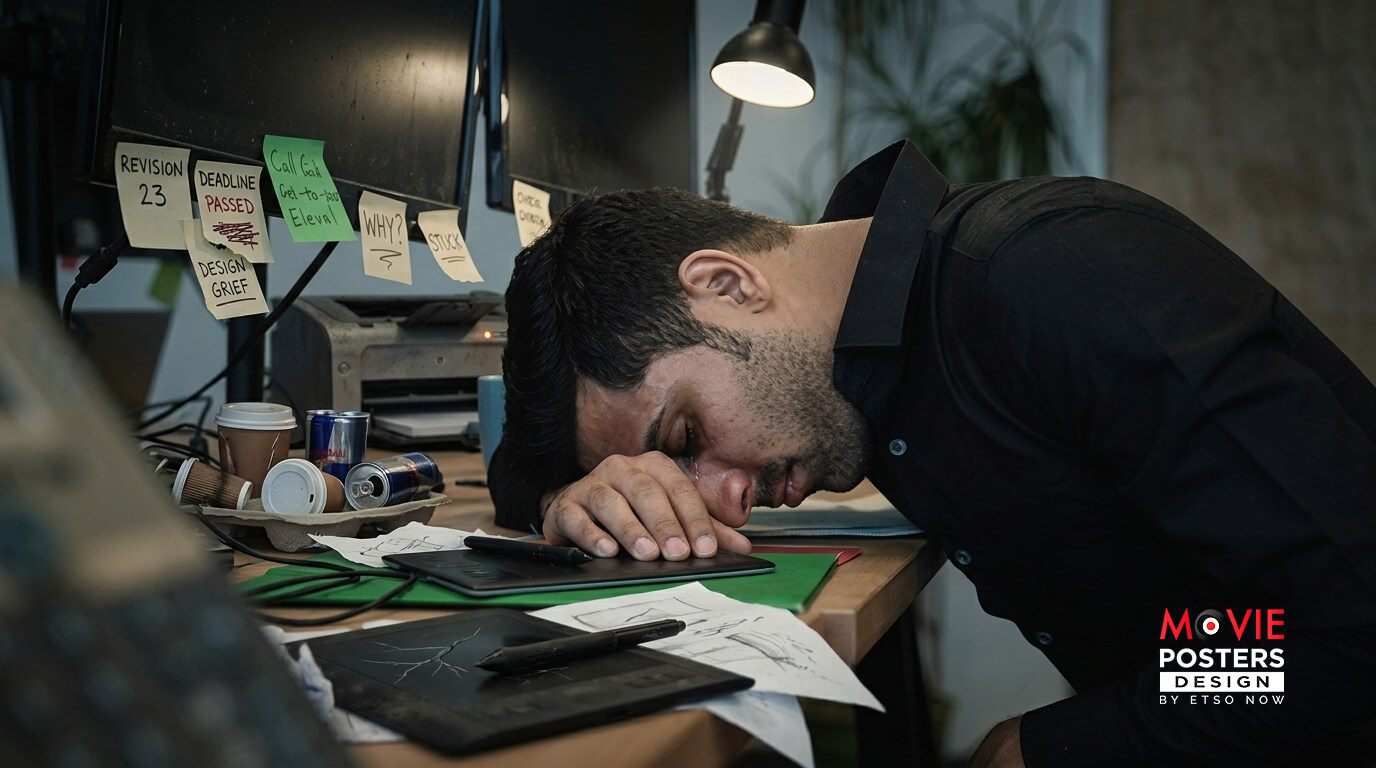
Dear world,
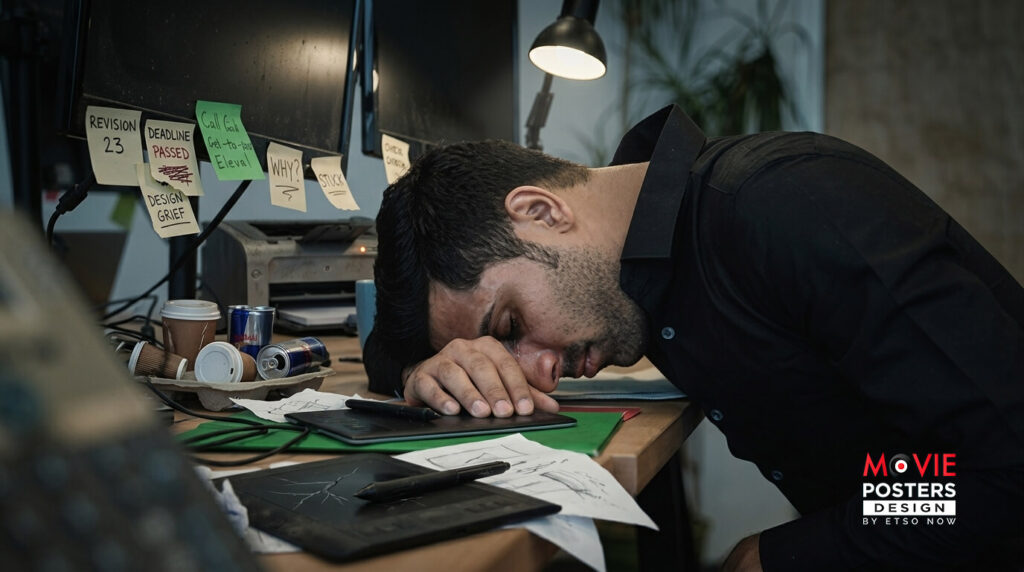
Designers and Creatives, we are scrumbling.
Many creators went to school. They spent years and real money earning their craft, sitting with it, failing at it, learning from it. They took jobs. They built careers.
And now many of them are being asked to come back into the room, not as the lead, but as the person who cleans up what the machine got wrong. For less.
Some of them are rethinking their entire lives right now. Not their next project. Their entire lives.
Who else is feeling the pain???
The music, film, art, interior design, and overall creative world are undergoing a massive transformation, and many are scrambling to make ends meet.
Remember when AI finally came around?
We all remember when it crept in. We were excited. There was something so genuinely wonderful and innovative about how quickly you could pull an image out of thin air from nothing but pure thought. Myself and every designer I knew at the time believed this was going to be the most incredible addition to our workflow. Imagination, after all, is limitless. So why would the tools built from it be anything less?
We jumped in. Headfirst, wide-eyed, Midjourney tabs open. What a thrill.
The honest truth is that it still is.
But for those who make their living in this industry, the relationship has changed. We do not spend our days actively prompting the way we once did. Most of us no longer have the luxury of time to dabble. We are too busy trying to hold on to what work remains. It turns out that for a lot of us, what we believed would sit beside our work quietly and helpfully ended up sitting in our chairs instead.
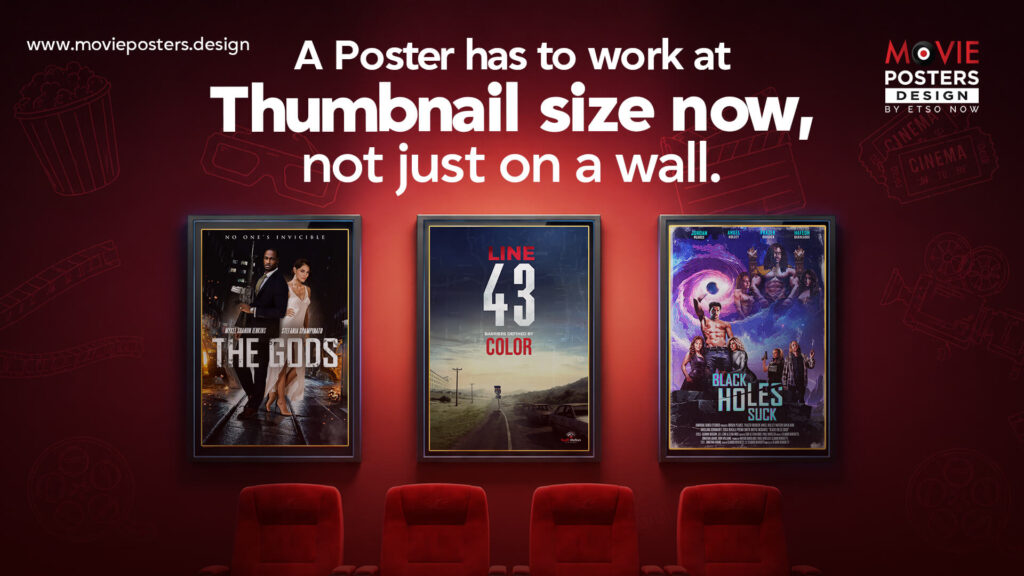
For those of us whose livelihood lives specifically in posters and trailers, the shift happened fast and without much ceremony. Our distributor friends needed to get their films out the door. The landscape was changing overnight and nobody wanted to be the last one moving.
So speed became the currency and “good enough” became the standard. A poster that could be generated in minutes, however imperfect, felt like a win.
But was it?
Those “FAST” (pun intended) posters didn’t come in layers. They couldn’t be edited with any real precision because the tools that created them cannot reproduce the same element twice with a slight adjustment. You either keep it as is, or you scrap it and start over.
Then comes the resizing.
Then the copyright problem, because work generated this way carries no protection. Any distributor, any competitor, anyone at all can take that image or any part of it and use it freely, without consequence.
And slowly, what seemed like savings became a much more expensive kind of loss.
Perhaps that is how we arrived where we are now.
We find ourselves in a strange and heavy place. Not only are the jobs going, but the clients who left are not easily coming back. Some, we suspect, may be rethinking their choice and will revert back to the old ways. Some may still be trying on their own, convinced they are almost there. Some may be waiting to see if our prices will drop further.
Whatever the reason is, we just want things to get to a place where we all win.
Let’s expand the horizons a little, for fear of being accused of being isolated to one industry.
The more I have listened to designers outside of film marketing, the more I have realized that this conversation is not unique to posters and trailers. Spend enough time reading through design communities and a pattern begins to emerge.
The dominant emotion is not excitement. It is not even anger. More often, it sounds like exhaustion. We are collectively exhausted. Young designers are struggling to find their first opportunities. Mid-career designers are sending out applications for months at a time. Senior designers who once felt secure are competing for roles they never imagined having to chase. AI comes up in these conversations constantly, but rarely by itself. It arrives alongside shrinking budgets, fewer opportunities, and an industry that increasingly asks people to do more with less.
Again, many of these designers are not arguing that AI can fully replace them. In fact, most seem to agree that it cannot. Strategic thinking, creative judgment, emotional intelligence, and the ability to understand an audience remain stubbornly human skills. Their concern is something more subtle. They worry that some clients no longer care enough about the difference.
When speed becomes the primary measure of value, the question shifts from “Is this the best solution?” to “Can we get by with it?” That shift may save money in the short term, but it also changes the relationship between craft and commerce in ways we are only beginning to understand.
I say again, designers went to school. They spent years and real money earning their craft, sitting with it, failing at it, learning from it. They took jobs. They built careers.
And now many of them are being asked to come back into the room, not as the lead, but as the person who cleans up what the machine got wrong.
We watched the writers go on strike and we understood, perhaps for the first time, exactly what they were fighting for.
Designers cannot strike in the same way. Most are freelancers. The work does not wait. The film still needs to be sold.
And so we absorb it. We adjust. We get quieter and quieter about how much it hurts.
Which brings me to something Chris Do, founder of The Futur and one of the most clear-eyed voices in creative education today, said recently. He laid it out plainly: there are six skills that tools simply cannot replicate. Here they are:
- Strategic thinking.
- Emotional intelligence.
- Creativity.
- Leadership.
- Adaptability.
- Ethical judgment.
Every single thing in that list one of those lives inside a good designer. Not as a bonus quality. As the actual job.
When a designer looks at a film brief and decides that this story needs to feel like a whisper rather than a shout, that is strategic thinking and emotional intelligence working together in real time. When they push back on a client’s first instinct because they can see what the audience will feel before the client can, that is leadership. When they find a way to make a micro-budget film look like it belongs on a major studio slate, that is creativity and adaptability in the same breath!
These are not soft extras sitting alongside the technical work. They are the work. And a prompt box, however sophisticated, has not learned how to hold all of that at once.
Which is why I think we sometimes misunderstand what is actually being lost.
A poster is not decoration. A trailer is not a preview. They are the first conversation a film has with its audience. They are the handshake. And when that handshake feels generated, when it feels assembled rather than considered, audiences feel it too.
Some will argue that audiences do not notice. Okay, well, maybe some do not. But I think many of them feel it in ways that are difficult to articulate.
Authenticity has a texture. Originality has a texture. Human intention has a texture. People know the difference – intuitively.
The encouraging news is that reality has a way of correcting itself. Some clients are beginning to rediscover what they abandoned. Some are returning. They are discovering that fast and cheap can become expensive when the work fails to connect.
And that my friends, points to something larger than posters, trailers, or even design itself.
This is a conversation about whether we still value mastery. If experience matters. If human judgment still matter.
Those questions are bigger than AI. They are questions about culture. And the answer we give will determine far more than the future of design.
If you consider yourself part of the creative community, whether in design, illustration, photography, writing, or filmmaking, musicians…I mean, who else is feeling the pain?
The industry only pays attention when enough people are willing to speak. If any part of this resonates with your experience, pass it on. The conversation is bigger than any one profession, and the people shaping the future of our industries need to hear from the people doing the work.
Sincerely,
Grieved.